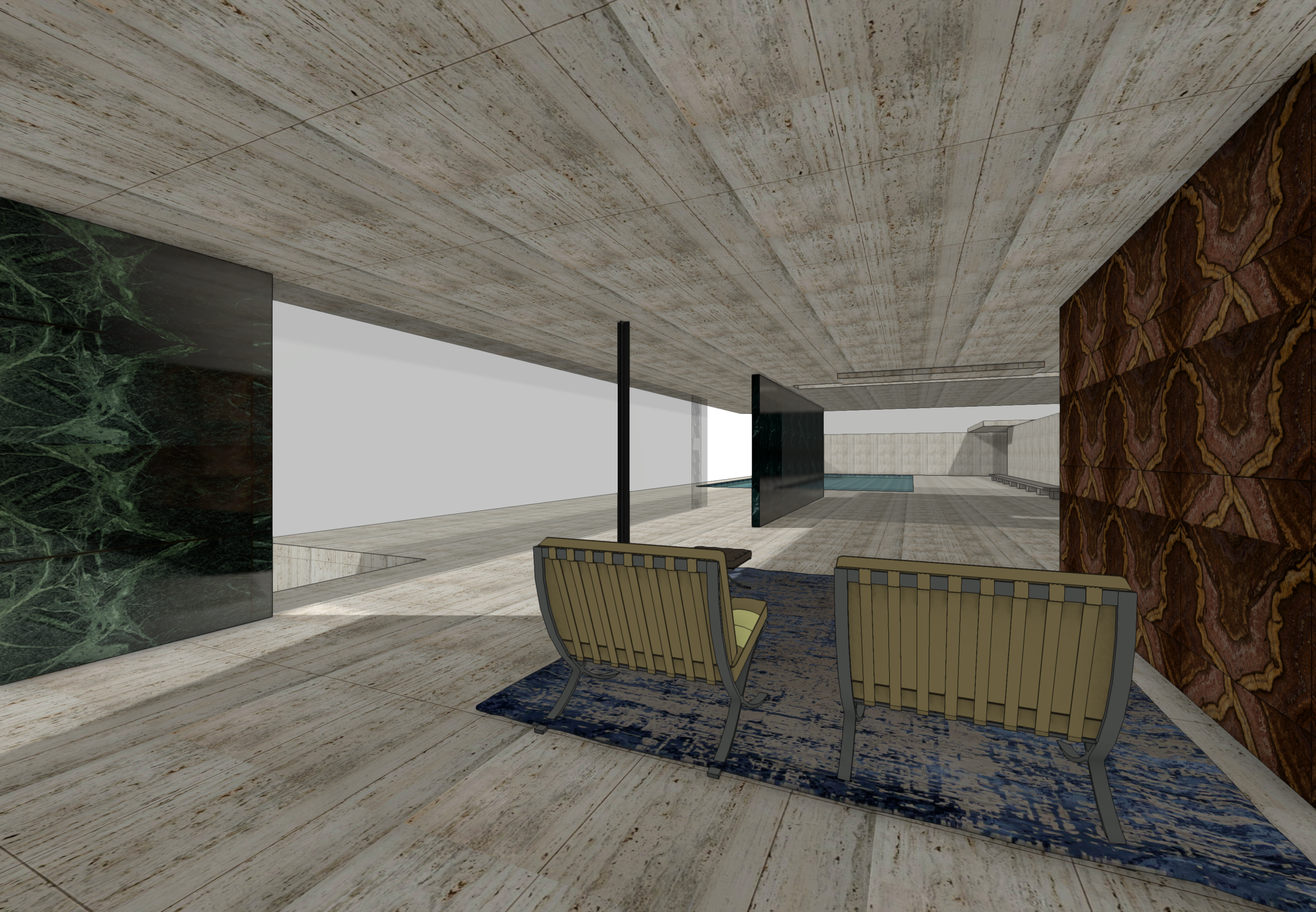
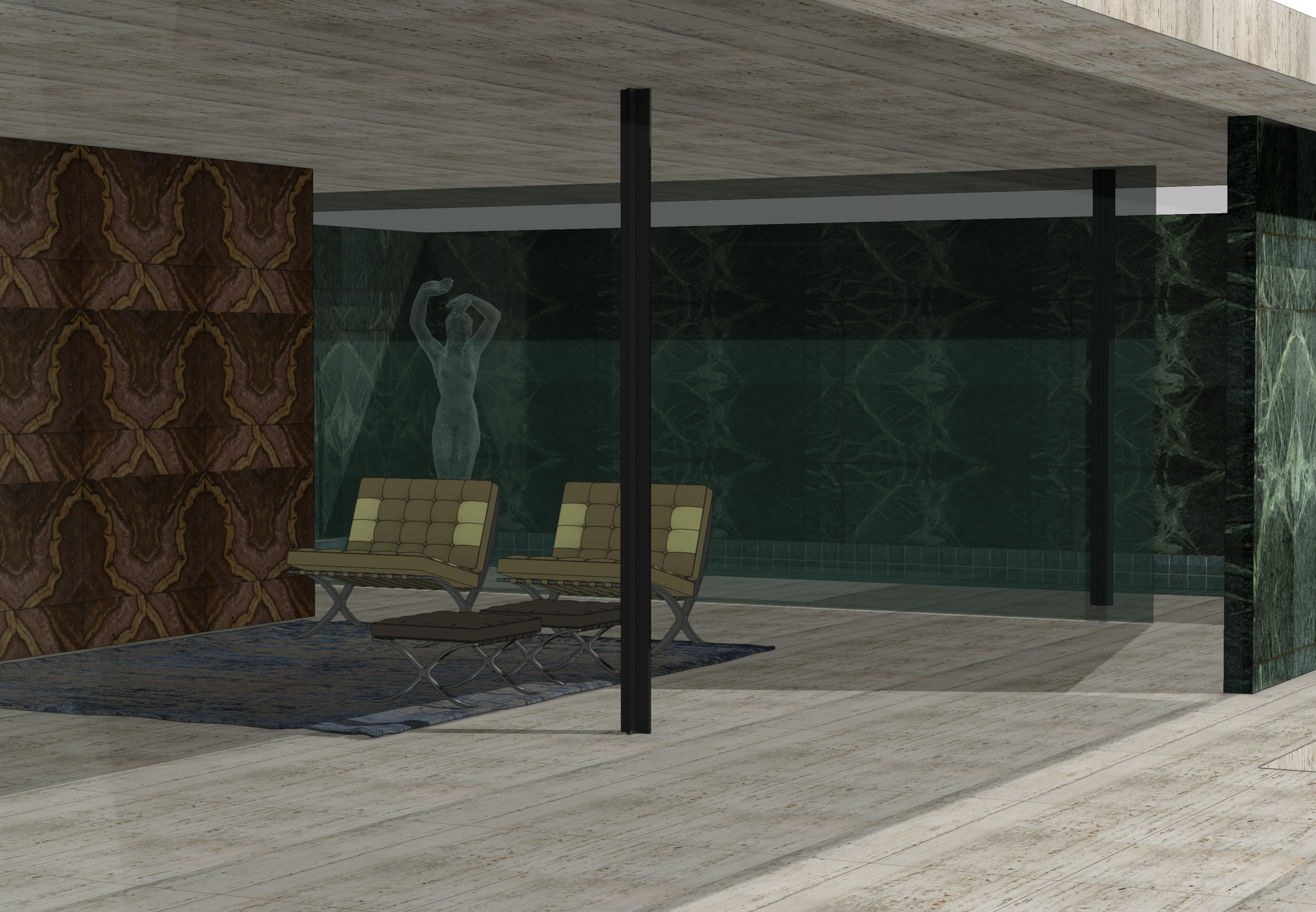
Barcelona Pavilion
Case Study — Spatial Design Reconstruction
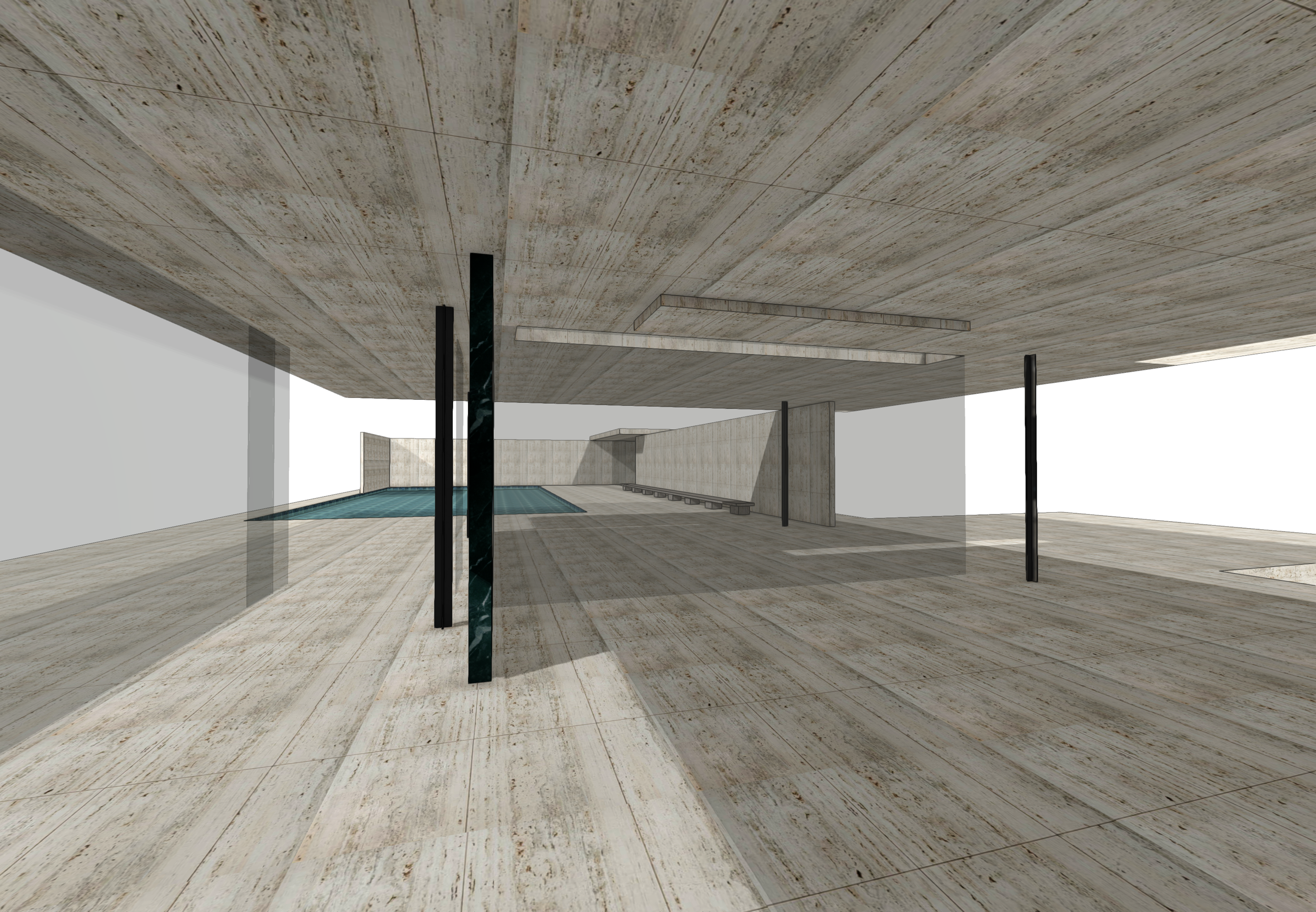
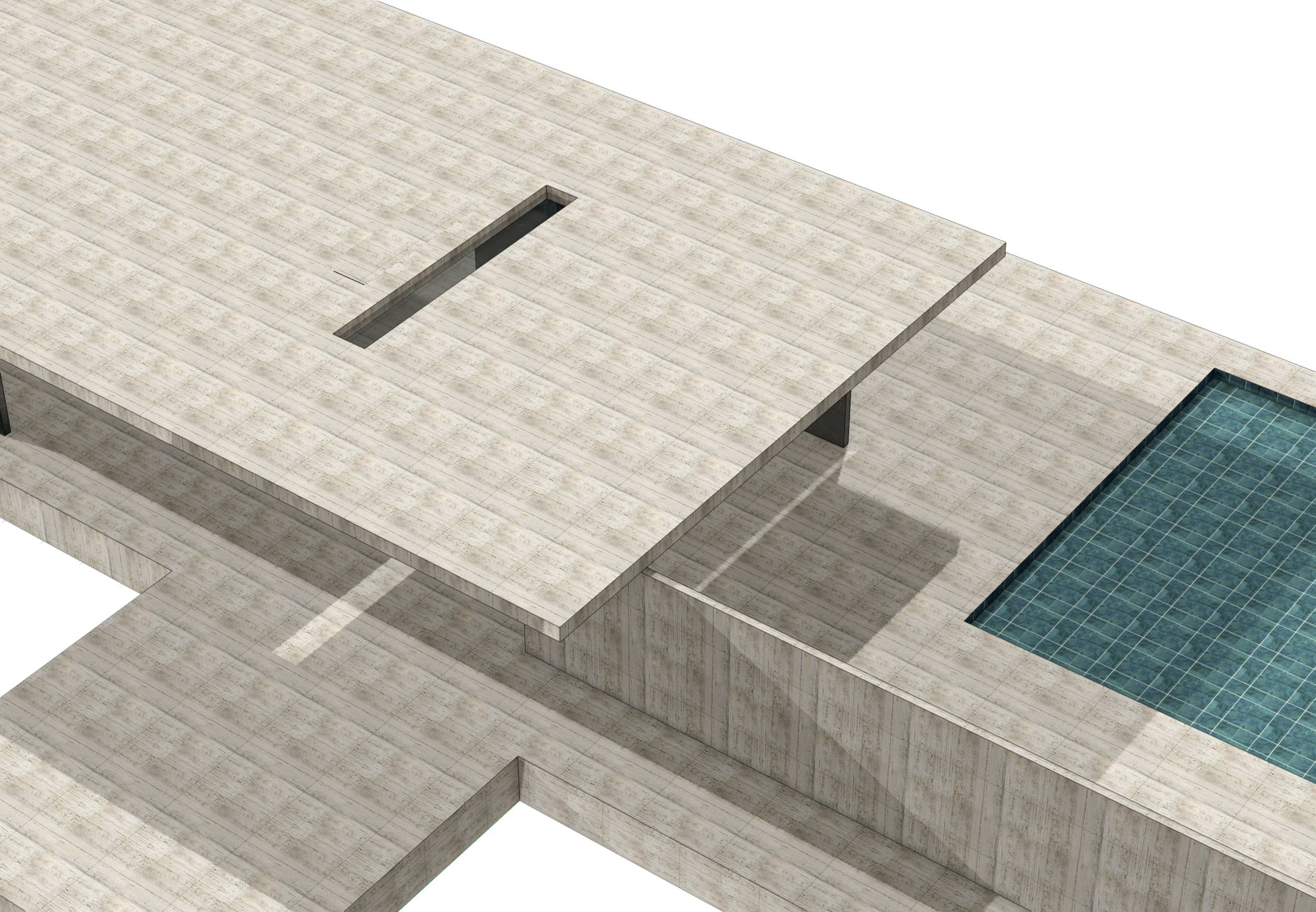
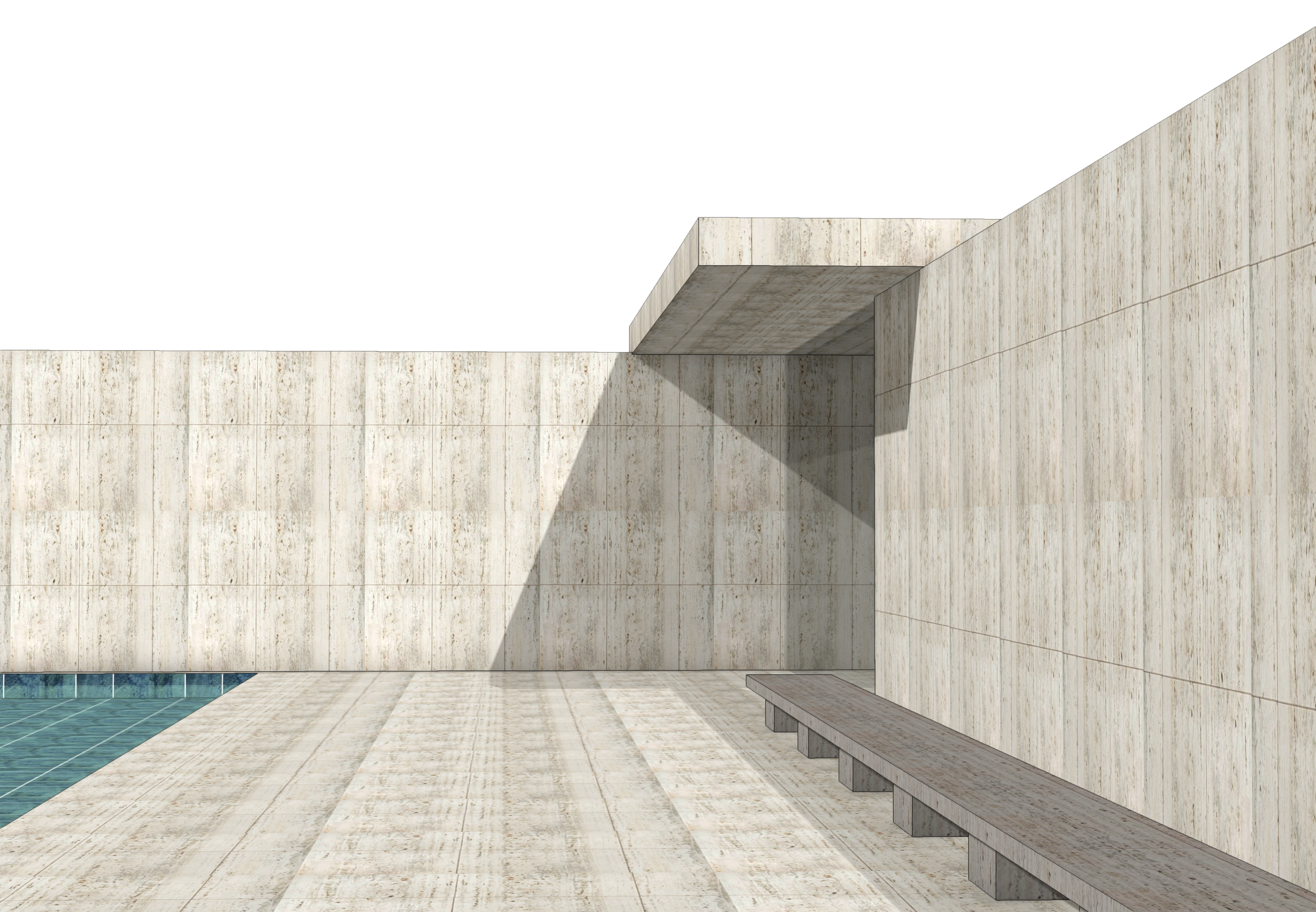
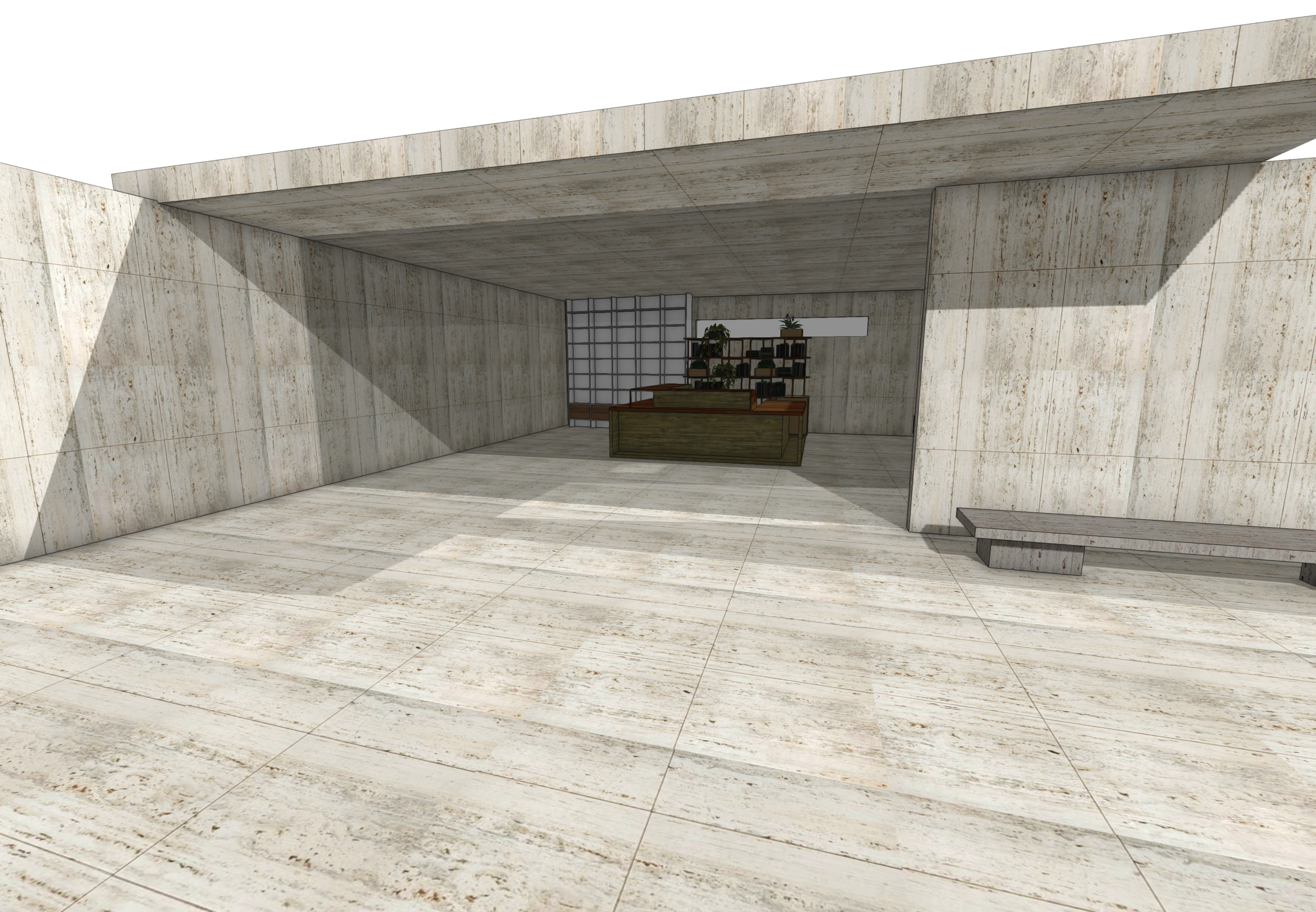
Created as part of a Spatial Design course at Chelsea College of Arts, University of the Arts London, this project explores the architectural principles of Ludwig Mies van der Rohe's iconic Barcelona Pavilion through research, analysis, drawing, and three-dimensional digital modelling.
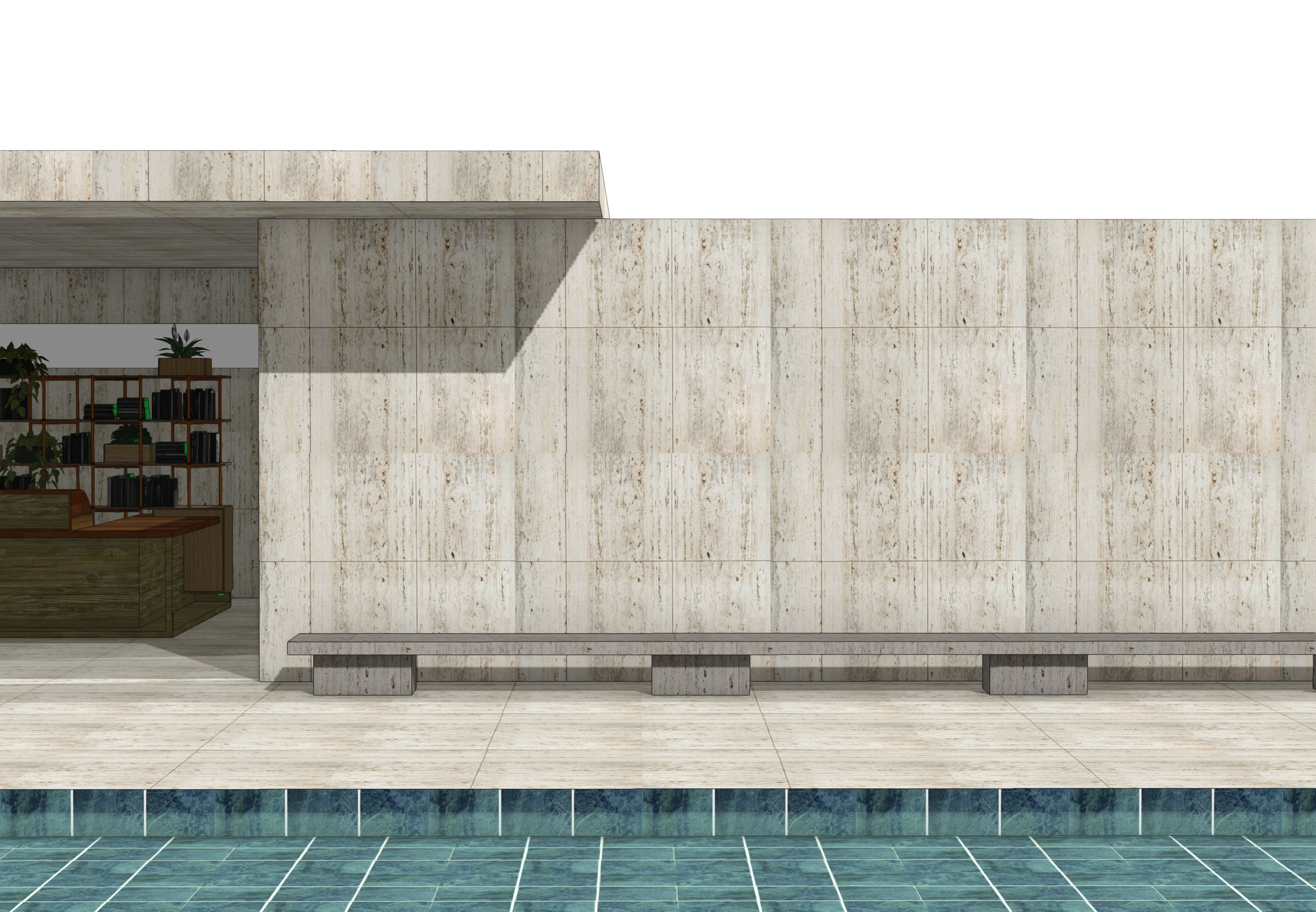
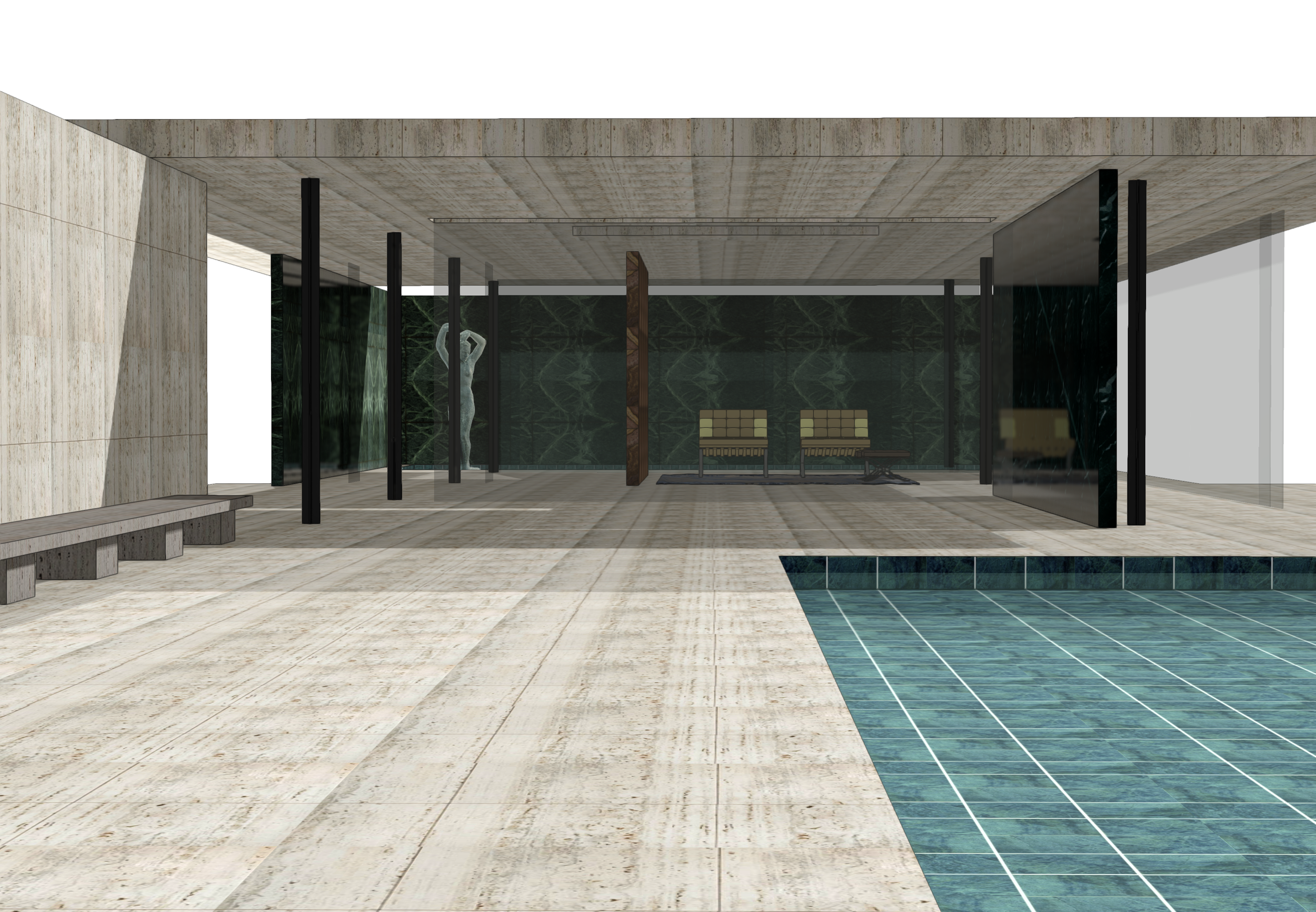
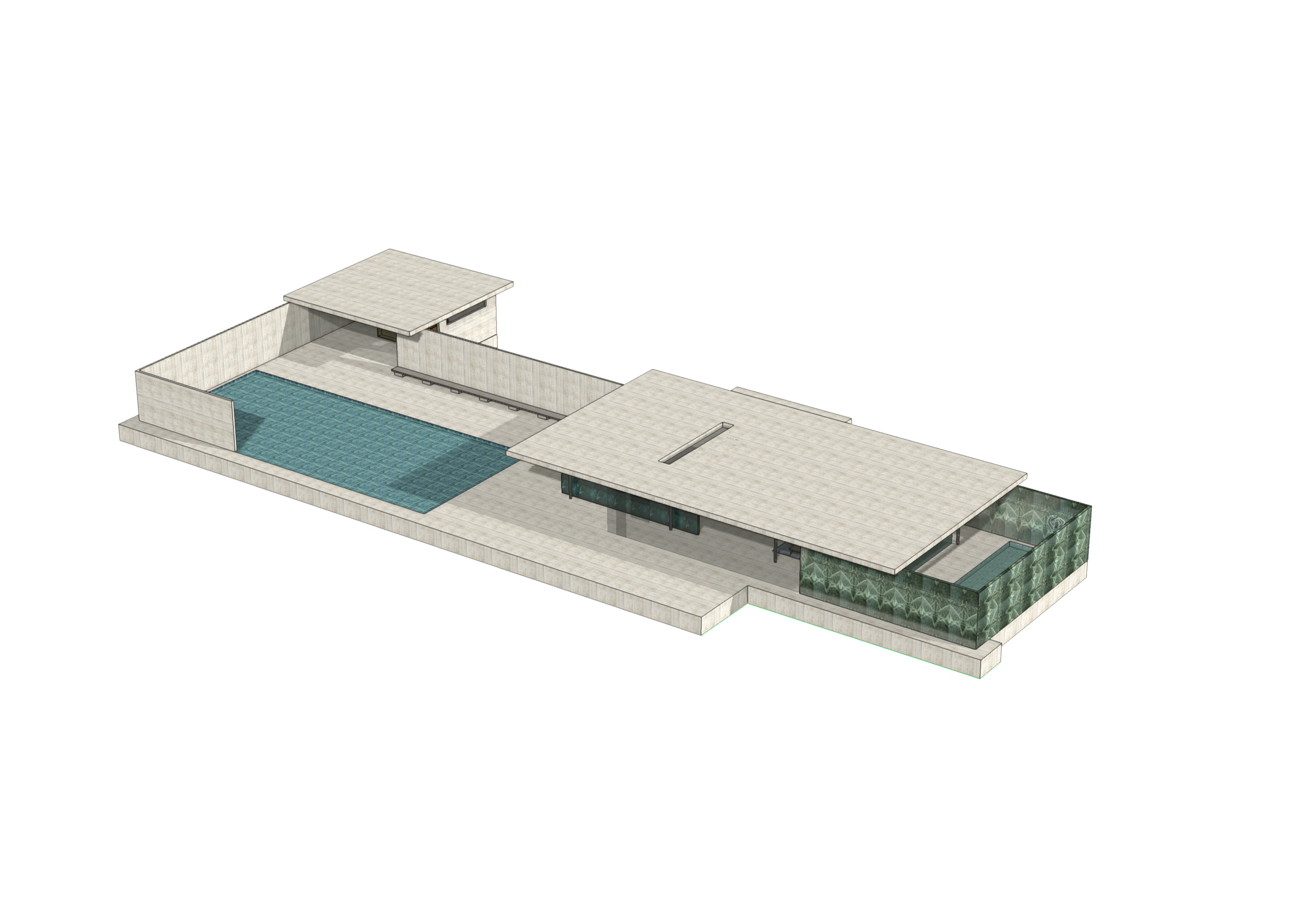
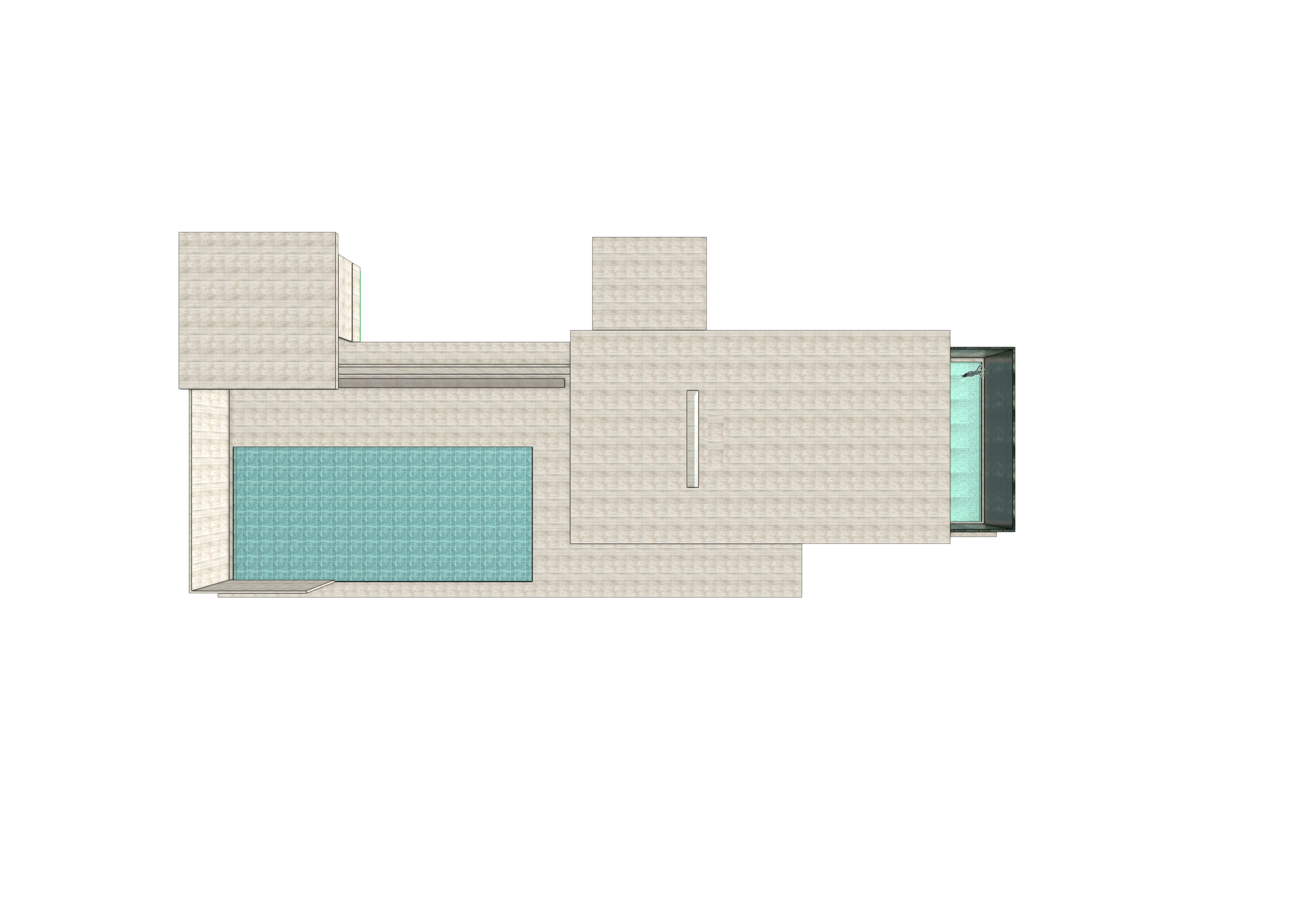
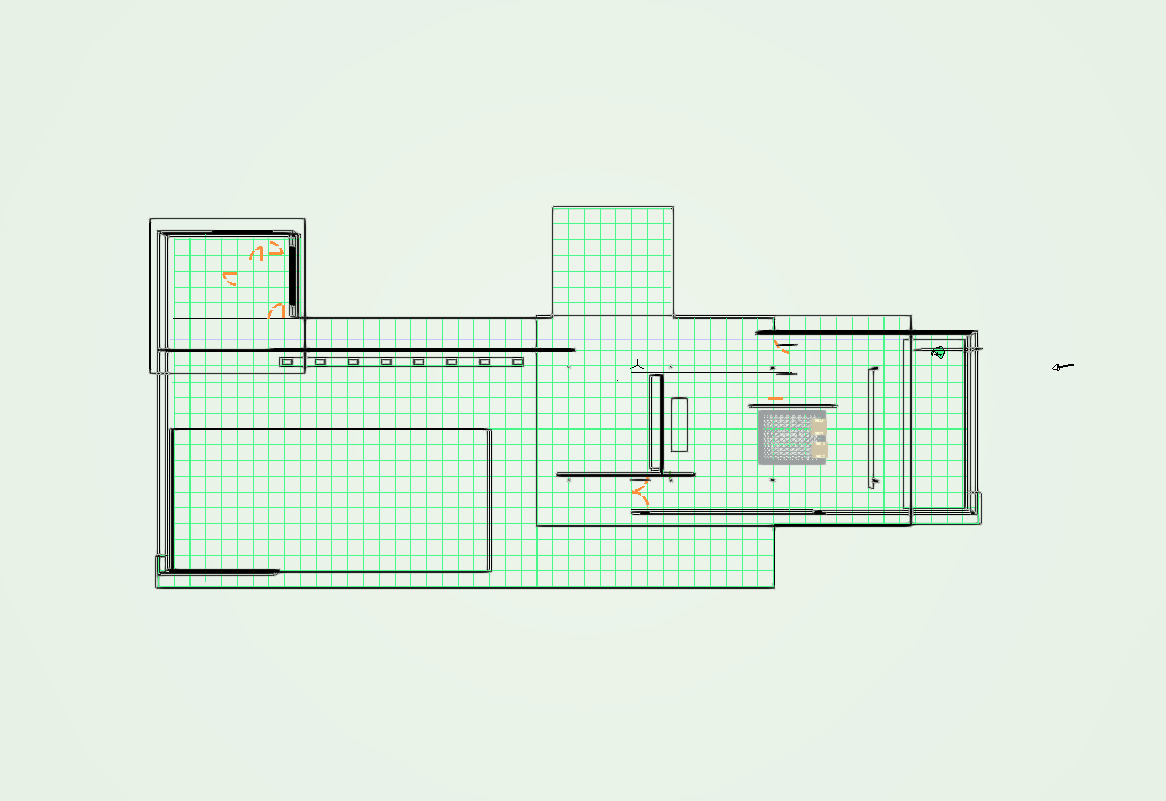
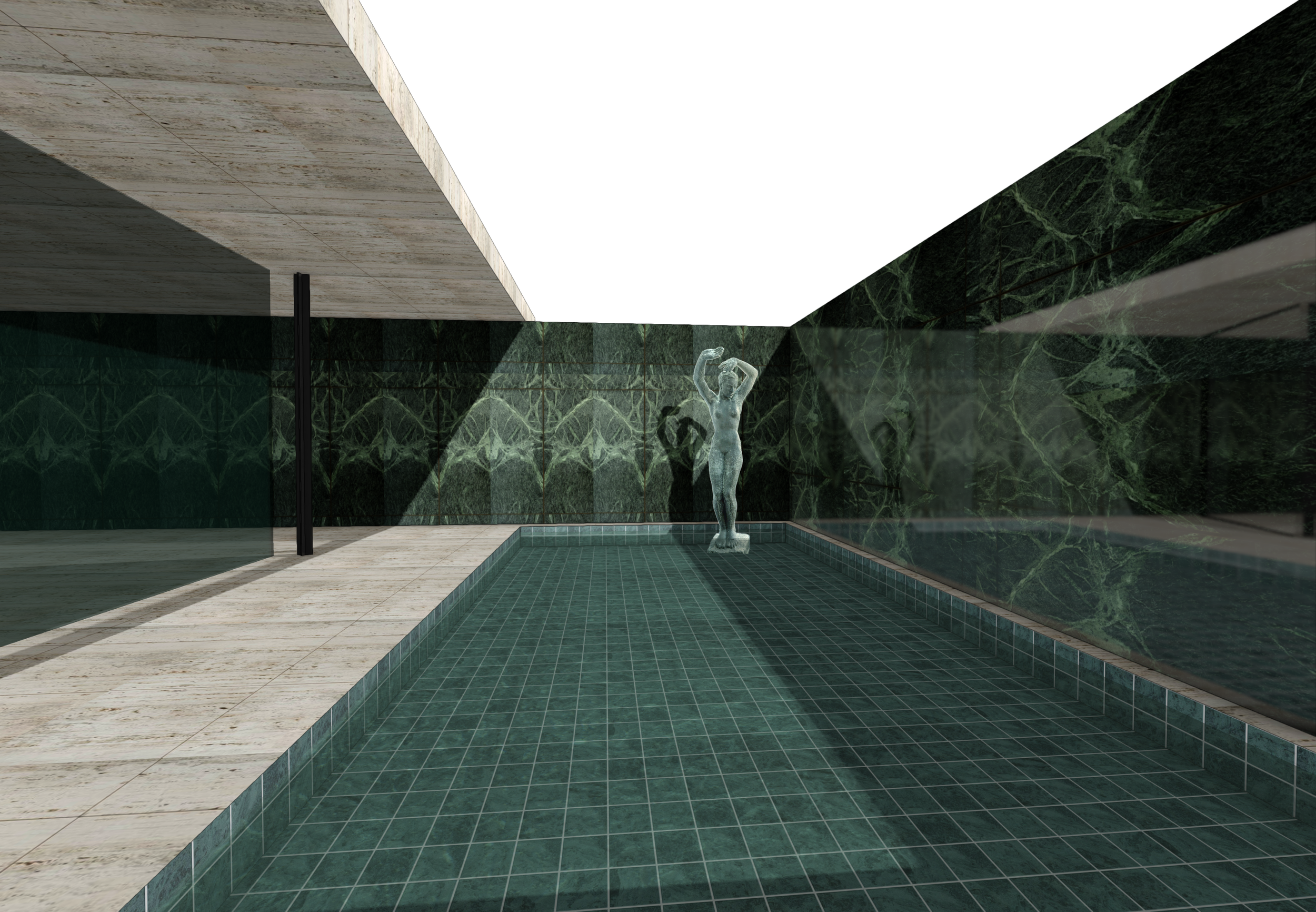
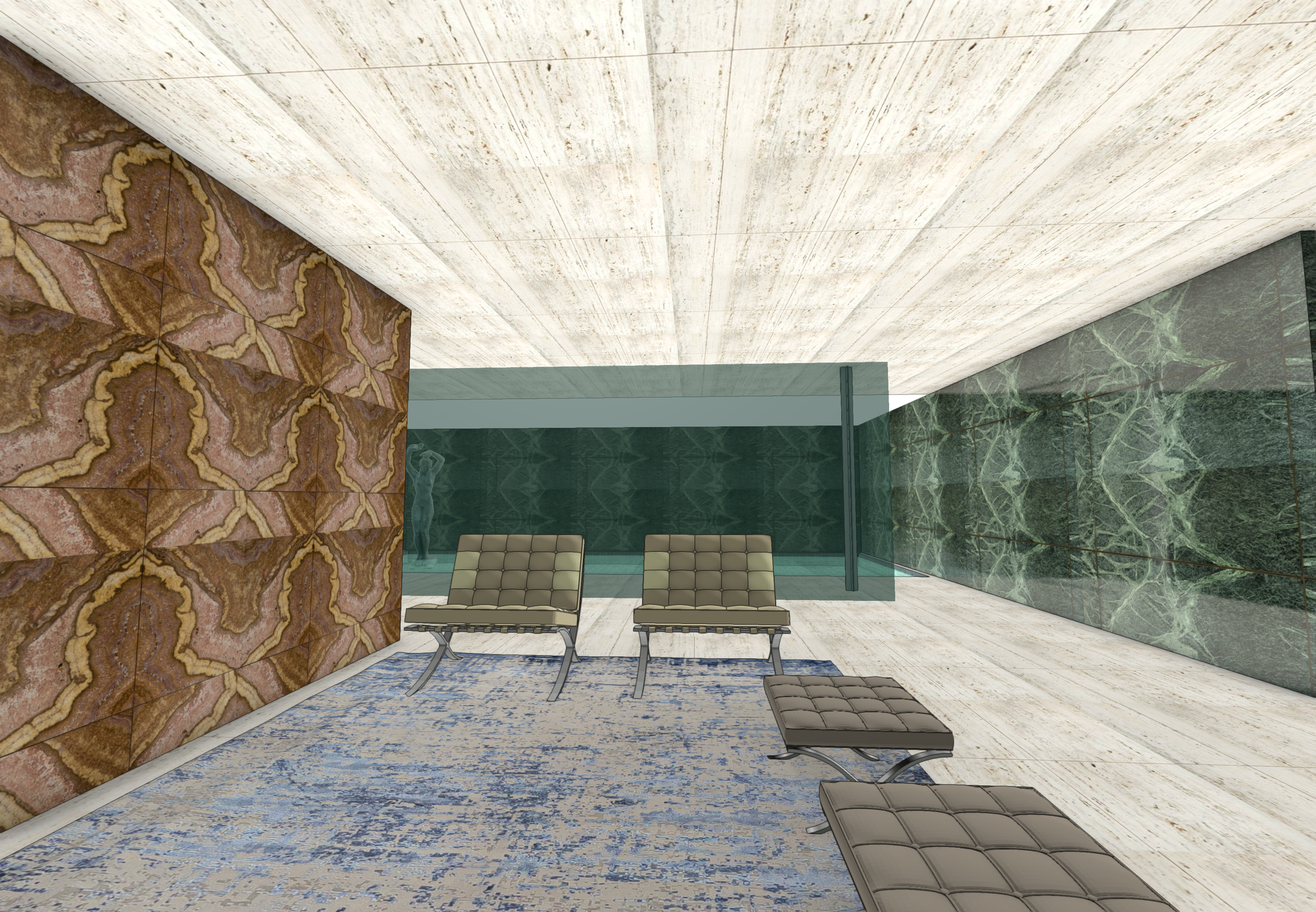
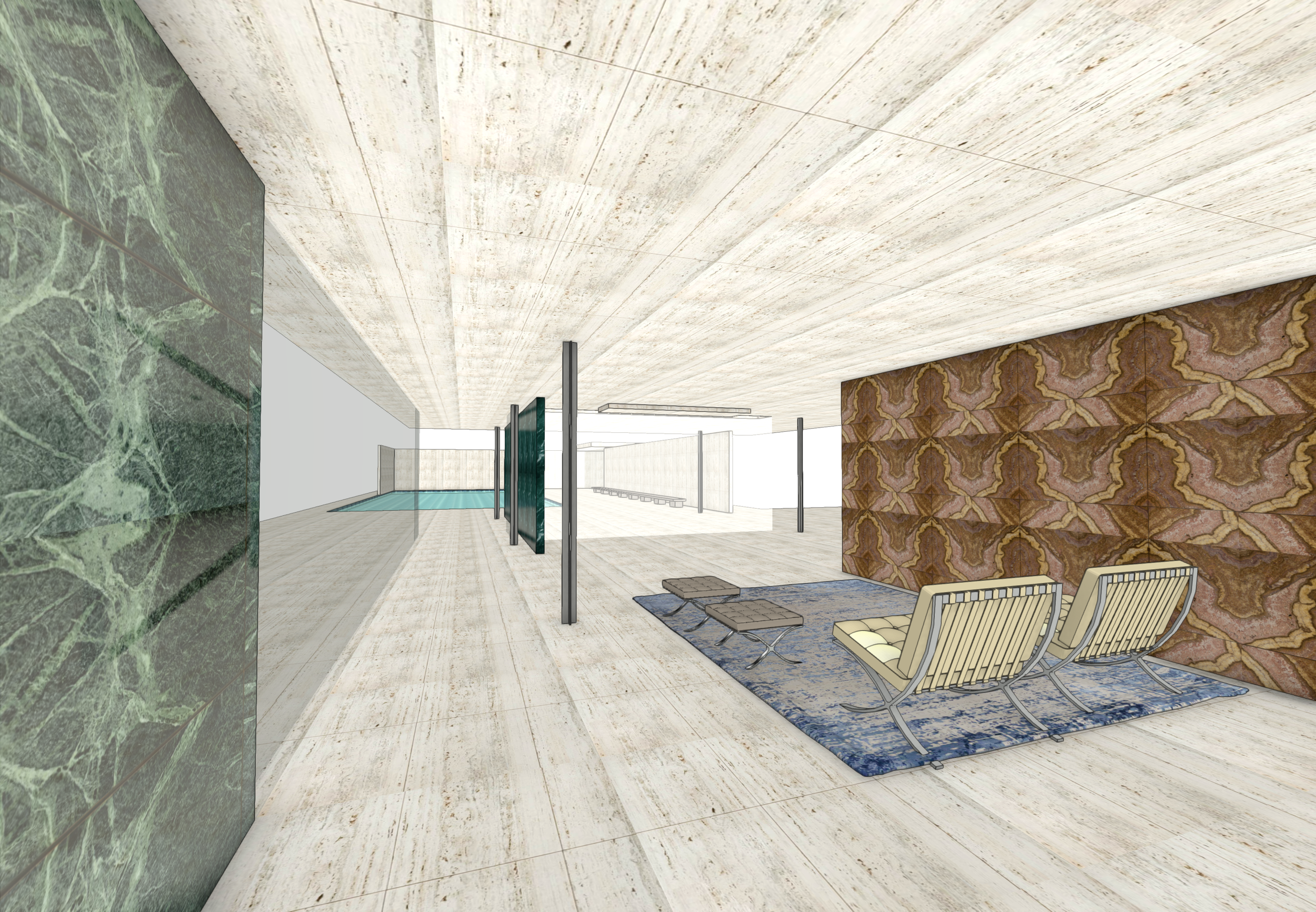
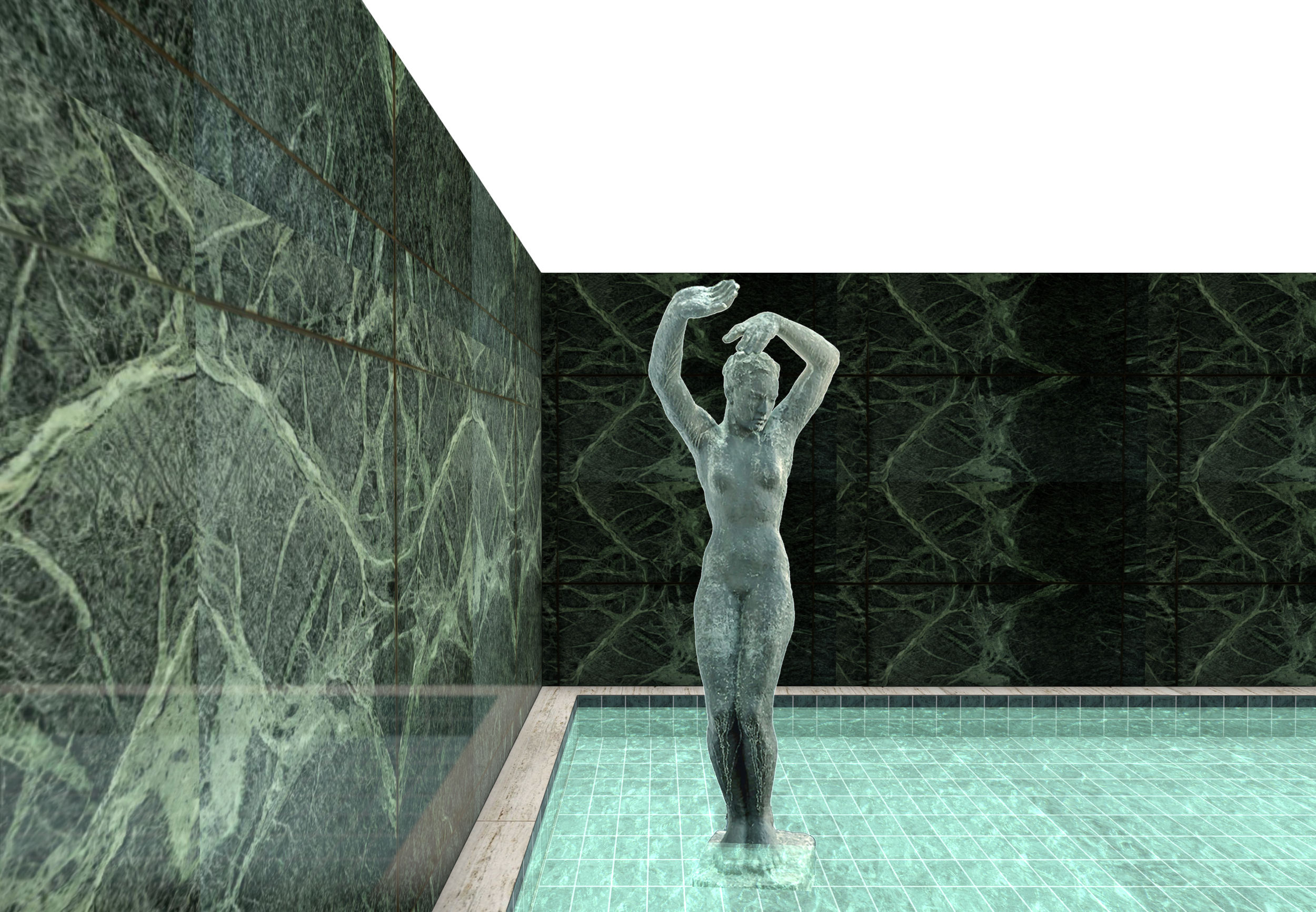
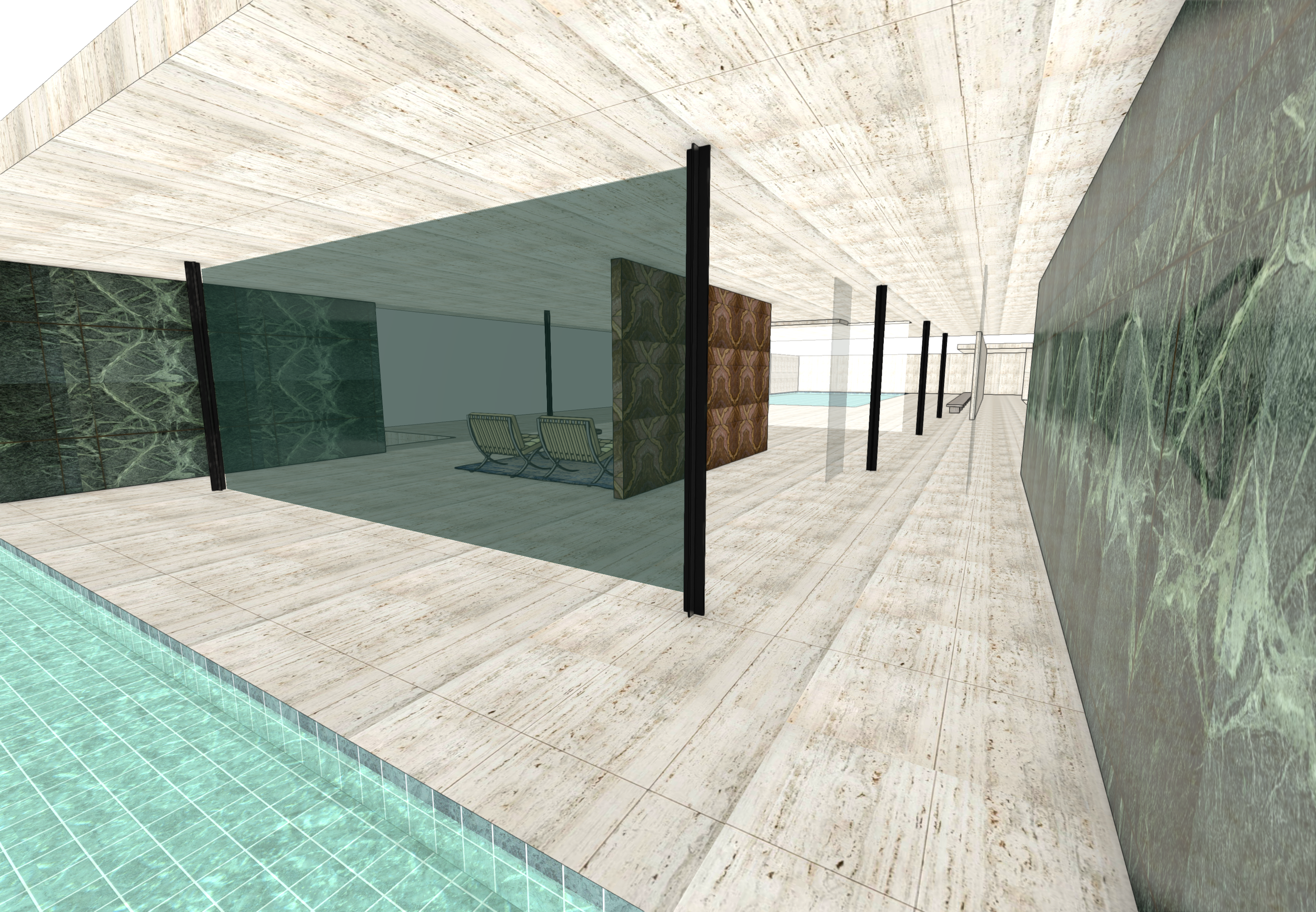
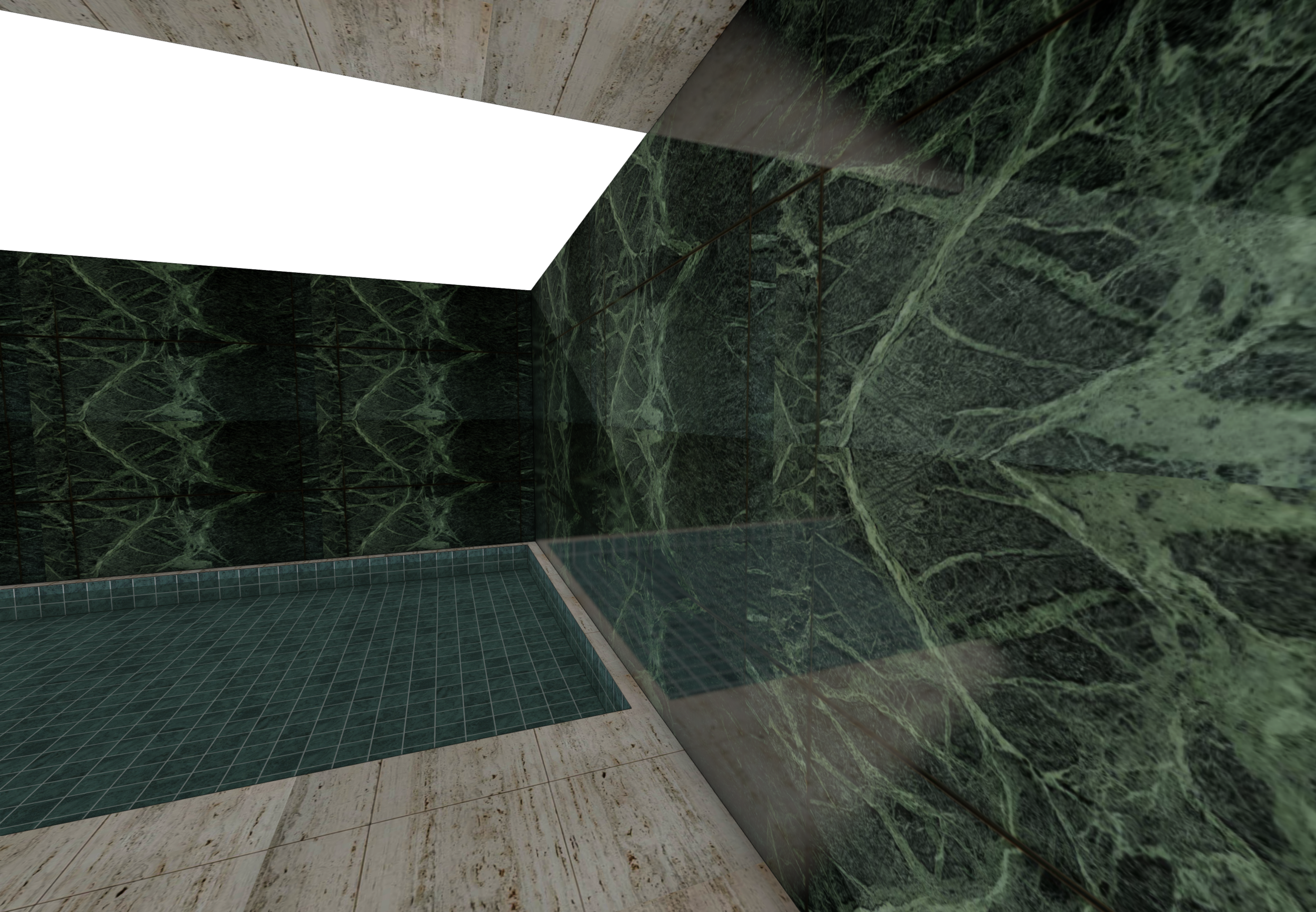
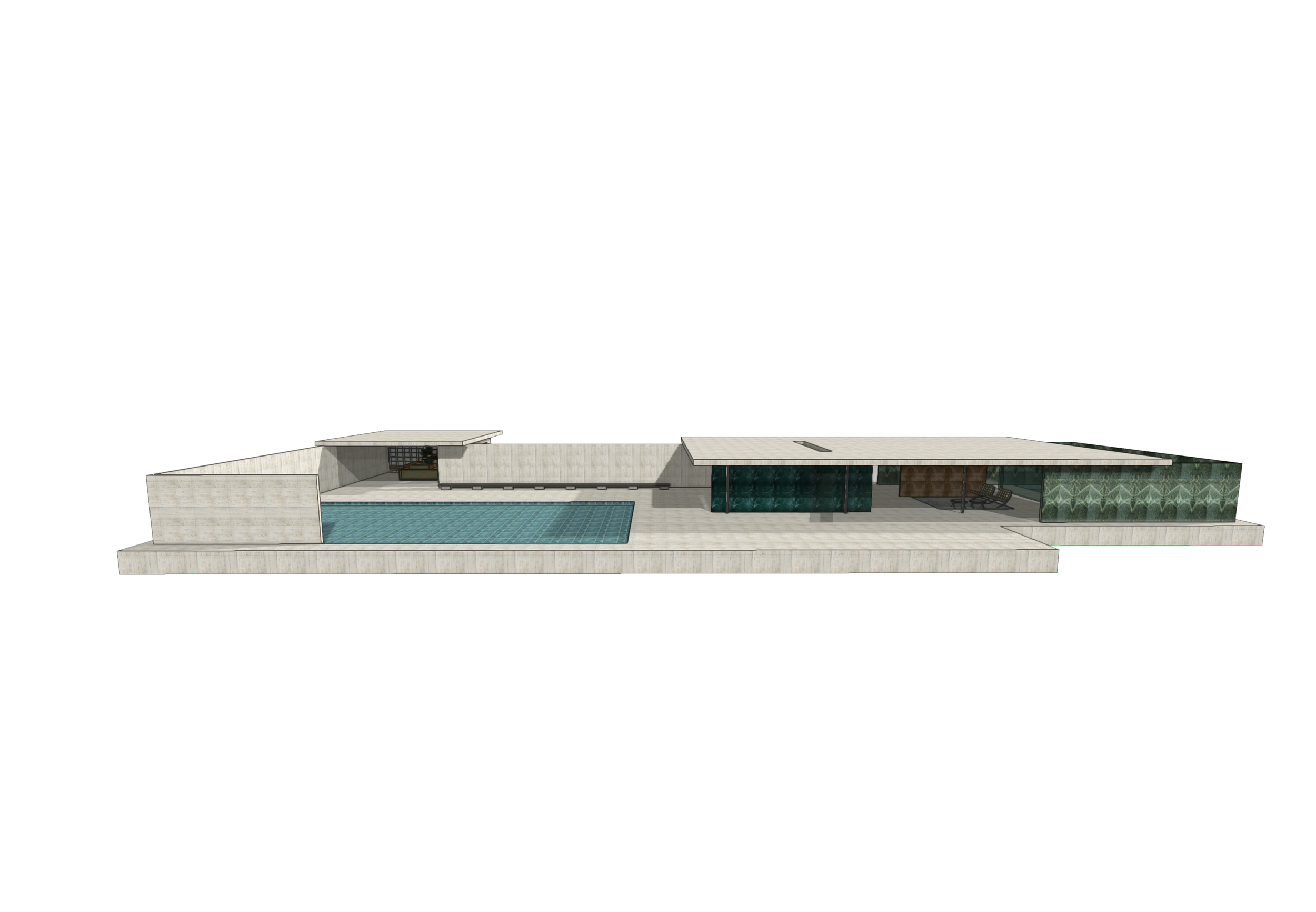
Using the pavilion as a case study, the project examined the relationship between space, light, materiality, movement, and perception, developing an understanding of how environments are experienced rather than simply observed. Working from original drawings and site references, the pavilion was reconstructed through plan drawing, scale development, and digital modelling in Vectorworks, introducing key spatial design methodologies and processes used to translate two-dimensional information into three-dimensional form.
Marking an introduction to spatial design, the project bridged graphic and spatial practice, demonstrating how principles of composition, structure, and visual communication can extend beyond the page to shape the environments we inhabit.